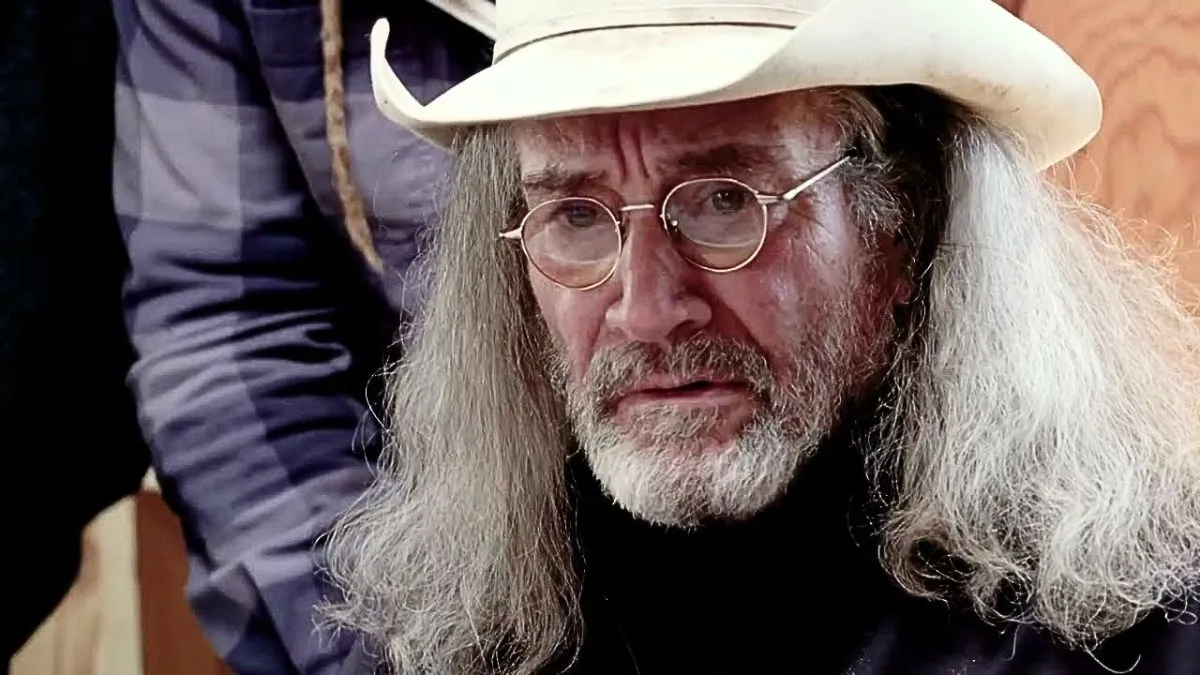
Ever heard of the Uintah Basin? Most people haven't, unless they're obsessed with Skinwalker Ranch or local legends about Spanish gold. It's a weird place. Deep in Utah, Duane Ollinger poured every cent he had into a 160-acre property called Blind Frog Ranch. He wasn't looking for a vacation home. He was looking for a treasure he believed sat right under the rock. Mystery at Blind Frog Ranch Season 1 introduced us to this chaotic, high-stakes gamble, and honestly, it’s one of the strangest things to hit Discovery Channel in years.
You’ve got a guy who sold his high-tech contracting business in Texas to dig in the dirt. That’s Duane. Then there’s his son, Chad Ollinger, who seems to be the voice of reason—or at least the guy trying to make sure his dad doesn't go broke. They aren't just digging for coins. They’re looking for a legendary cache of Aztec gold, or maybe Jesuit gold, depending on which local rumor you believe. But the land doesn't want them there.
That sounds like a TV pitch, right? But the show leans hard into the "reality" part of reality TV.
The Underwater Cavern and the Box
The central hook of Mystery at Blind Frog Ranch Season 1 is the "box." Early on, the team uses satellite imagery and ground-penetrating radar. They find what looks like a massive metallic object submerged in an underwater cavern system.
Getting to it is a nightmare.
The water in these caves isn't normal. It’s thick with sediment and, as the crew discovers, potentially dangerous gases. When Chad dives into the cavern—which, by the way, is a terrifyingly narrow hole in the ground—he finds himself in a subterranean world that defies easy explanation. He sees what he thinks is a wooden box or a crate. It’s wedged. It’s heavy. It’s covered in hundreds of years of silt.
The logistics of Season 1 are basically a series of "one step forward, two steps back" moments. They try to pump the water out. The cave floods back. They try to drag the box out with a winch. The cable snaps. It’s frustrating to watch, but it feels authentic to the struggle of amateur archaeology. They aren't using a multi-million dollar Smithsonian budget. They’re using backhoes and grit.
Why Blind Frog Ranch Season 1 Feels Different
Most treasure hunting shows feel like they’re chasing ghosts. Here, the "ghosts" are physical. We’re talking about 15-pound Gallium logs and strange electromagnetic interference.
Let's talk about the Gallium.
During the first season, the team uncovers a strange, silver-colored metal. It melts in your hand. In the world of science, Gallium is a real element, but finding it in raw, processed-looking "logs" buried in the Utah desert is genuinely bizarre. It’s not something you just stumble upon while gardening. This discovery shifted the tone of the show from a simple gold hunt to something more... "X-Files."
Wait. Is it aliens?
Duane doesn't like the "A-word." He’s a practical man. But the Uintah Basin is famous for UFO sightings. In Season 1, the crew experiences "lost time." They see lights. They find dead animals that haven't decayed properly. Eric Drummond, the geologist on the team, tries to keep things grounded in science, but even he starts looking a bit rattled by the end of the premiere season.
The Security Problem and Trespassers
You can't talk about Mystery at Blind Frog Ranch Season 1 without mentioning the "intruders." Because the ranch is located near the infamous Skinwalker Ranch, it attracts a lot of "tourists." Some are harmless. Others? Not so much.
The team finds surveillance equipment that doesn't belong to them. They find people trekking across their land in the middle of the night. It adds a layer of genuine tension. Are these just curious fans, or is there a "men in black" element trying to stop them from digging?
Charlie Boylan, the ranch's head of security, becomes a central figure here. His job is basically a 24/7 headache. He’s dealing with tripped perimeter alarms while the Ollingers are trying to figure out how to breathe underwater. It creates this atmosphere where the ranch feels like a fortress under siege.
The Logistics of the Dig
The sheer physical labor shown in these episodes is exhausting. You see the mud. You see the broken equipment. It’s not a polished production.
- They used a massive "airlift" vacuum to try and clear the silt from the cave.
- They dealt with "sulfur pockets" that could have literally killed the divers.
- They had to navigate legal red tape regarding water rights and mining permits.
One of the most intense moments involves a "caisson"—a large waterproof structure—they try to drop into the ground to create a dry shaft. If you’ve ever worked in construction, you know how easily these things can go wrong. On the ranch, everything goes wrong. The ground in the Basin is unstable. It’s full of "honeycomb" rock structures that make drilling a gamble. You might hit solid stone, or you might fall into a void.
Misconceptions and Reality Checks
A lot of skeptics claim the "box" in the cave is just a rock formation. Honestly? It might be. Season 1 doesn't give you the "Grand Reveal" where they open a chest and find the Lost Dutchman's Mine. If you're looking for that, you'll be disappointed.
What it does give you is a look at the obsession.
Duane Ollinger isn't a crazy person. He’s a guy who saw something he couldn't explain and decided to bet his life's work on it. The show captures that "gold fever" perfectly. It’s about the mystery, not necessarily the payout.
The geologist, Eric Drummond, brings a lot of credibility. He doesn't just nod and agree with Duane. He asks for data. He wants core samples. He wants to know why the radiation levels spike near certain holes. This push-and-pull between "I want to believe" and "Show me the data" is what kept people watching.
Actionable Insights for the Curious
If you're fascinated by the events of Mystery at Blind Frog Ranch Season 1, don't just take the TV edit at face value. The Uintah Basin has a recorded history of weirdness that predates television by a century.
- Research the "Spanish Trail." There is historical evidence of Spanish explorers moving through Utah. While the "Aztec gold" theory is a stretch, the idea of hidden mining caches isn't entirely insane.
- Look into Gallium properties. The metal they found is real. It's used in electronics. Understanding why it would be buried in "log" form on a ranch is a rabbit hole worth falling down.
- Check out the Geology of the Basin. The Uintah Basin is a structural depression. Its unique rock layers often trap gases like methane and hydrogen sulfide, which explains some of the "hallucinations" or sickness reported by treasure hunters over the years.
- Follow the legal filings. If you're skeptical about the ranch's operations, you can actually look up mining claims and land deeds in Uintah County. It proves the Ollingers are actually putting in the legal work to own whatever they find.
The first season ended on a massive cliffhanger with the team finally getting a camera inside the "box" area. It wasn't the end of the story—it was just the moment they realized they were in over their heads. Whether it's treasure, ancient technology, or just a very expensive hole in the ground, the ranch remains one of the most compelling puzzles in modern exploration.
To get the full picture, look into the "Dorrity" family history in the area. Local legends often hold more truth than the flashy graphics on a TV screen. The real story of Blind Frog Ranch is buried in local archives as much as it is in the dirt.
Next Steps for Enthusiasts:
Watch the Season 1 finale again, specifically the sonar footage of the "cigar-shaped object" in the lower cavern. Compare those dimensions to the mining tunnels documented in the early 1900s in the nearby mountains. Often, what looks "alien" is actually forgotten industrial history. Also, keep an eye on the Bureau of Land Management (BLM) records for the area surrounding the ranch; any significant "finds" usually trigger a change in land status or environmental impact surveys that are public record.